
Announcing Our Seed Round to modernize E-commerce risk and fraud infrastructure
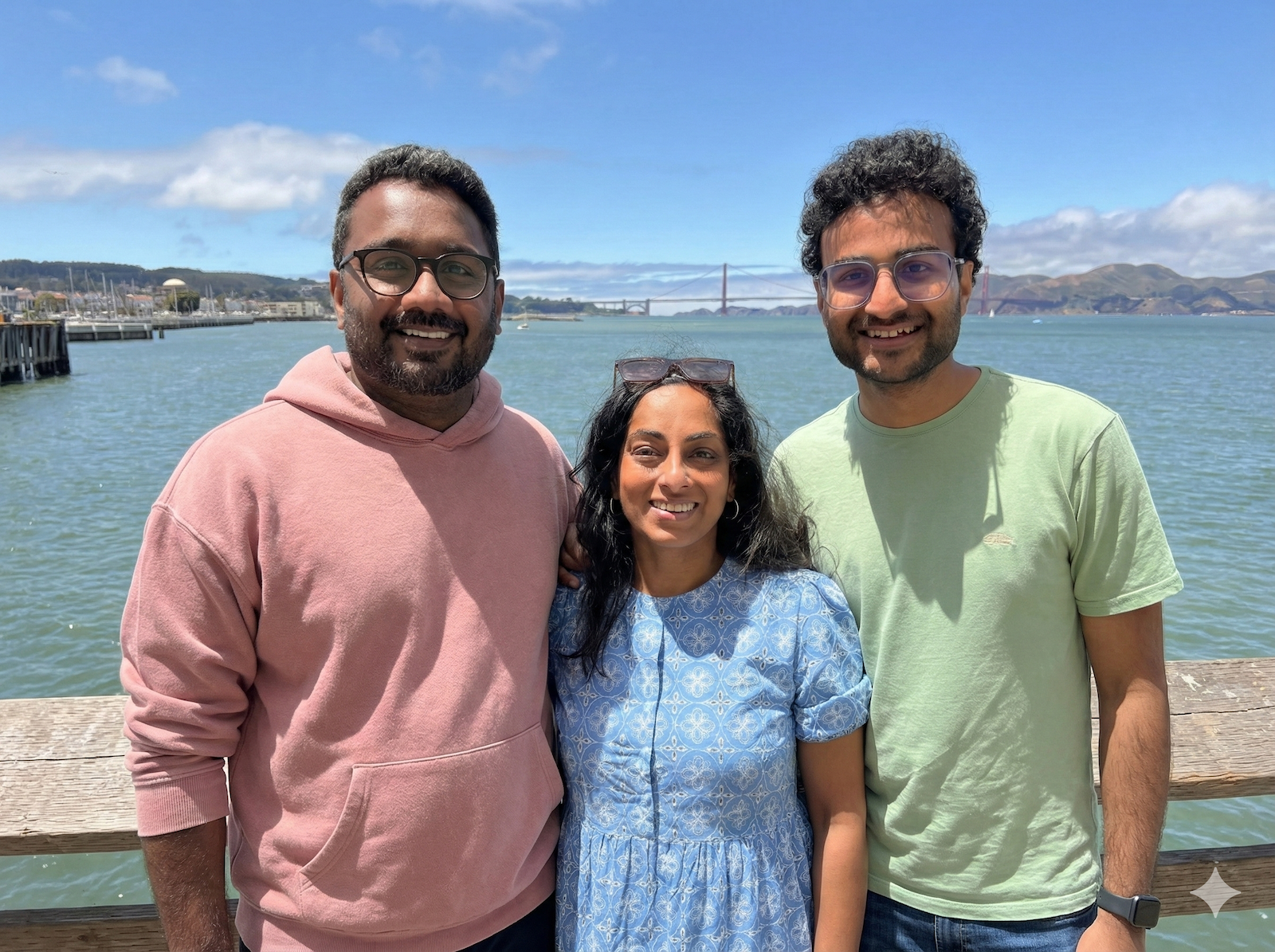
Today, we are announcing our seed fundraise of $5M, which was co-led by Dynamo Ventures and Infinity Ventures with additional participation from Defined Capital, PayPal Ventures, and early angels.
This raise is the result of two years of building, testing, learning, and conviction — from partners who believe in the problem, customers who feel the pain, and a team that came together on day 1, excited to fix what is still a huge opportunity.
E-commerce is entering a new era. Agentic commerce and AI will shape how people buy, how brands sell, and how decisions get made. But some of the most critical moments in the customer journey: returns and what happens post purchase, are still running on outdated systems, manual workflows, and guesswork.
This capital allows us to accelerate our mission: to build the intelligence layer for commerce risk, modernize post-purchase risk and fraud infrastructure, and build the next layer of trust in digital commerce.
Why We Built Pinch: From Operator to Founder, and the Problem We Couldn’t Walk Away From
I’ve spent over 20 years in the fraud world, in the trenches. After years as an operator at PayPal, I wanted to build again - not for the highs of the risks or the promised upsides, but to autonomously move fast and fix what was still broken. When the opportunity came to build with co-founders who shared the same passion for fraud, the same operator mindset, and the same bias toward execution, it felt like a gift. Pinch began as a conviction, not a pitch deck.
Why Returns?
Returns are a growing and least addressed source of loss in e-commerce. Payment fraud has mature tooling, chargebacks have infrastructure, and benchmarking. Returns abuse, for the most part, has neither.
As return rates have climbed and policies have become more generous, we saw a widening gap. Brands are managing returns like a logistics problem, while the losses are a fraud problem. Pinch was built to close that gap with data and machine learning, rather than blunt policy changes. Custom-built for eCommerce, bringing buyer identity and buyer journey together with item journey. Solving first-party fraud goes beyond machine learning and AI. It’s about thinking about experiences that build trust and deter bad behavior. About building where benchmarks and labels are hard to come by, and exactly the problem worth solving.
Why Now?
Everyone talks about returns losses as a $100B problem. We think of it as an opportunity. to solve a critical challenge intelligently, treat consumers uniquely and reward loyalty. To challenge the economics of fraud without sacrificing trust.
Consumers expect flexibility. They choose where to shop based on who treats them best when things don’t go perfectly. Online purchasing is accelerating faster than overall e-commerce, and generous policies have become table stakes for brands fighting for loyalty in a crowded market. Higher volume of returns bring abuse.
But logistics and operations are complex, and the ecosystem is fragmented: RMS, WMS, OMS. CX tools, warehouse teams, support teams, fraud teams.
There is no single owner of the truth, and no single view of the customer and all their breadcrumbs. So brands make broad, blunt decisions to deal with narrow, specific problems. The best customers pay the price. Managing abuse is often guesswork and manual. I don’t believe that in an AI native world, this is the future of commerce.
Returns are no longer just an operational detail - they’re a strategic signal about customer behavior, product quality, and policy design. Brands that treat them purely as a cost will struggle. Brands that understand and manage them intelligently will win on both margins and loyalty.
That’s the future we’re building toward at Pinch.